
Class 7 Worksheet on Comparative Passages

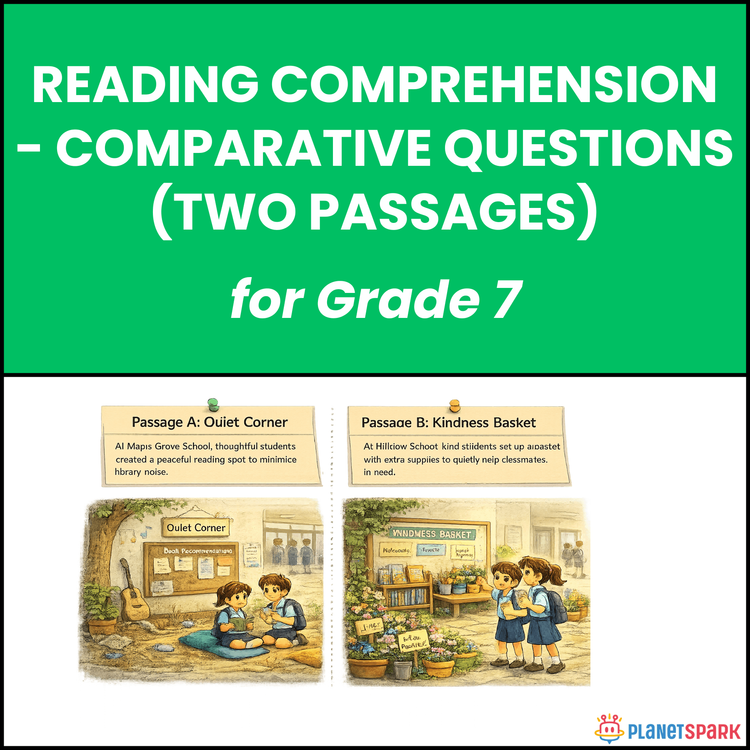
Class 7 Worksheet on Comparative Passages
Improving School Life Through Comparative Reading: Grade 7 Reading Comprehension Worksheet
This Grade 7 worksheet helps students strengthen reading comprehension by comparing two passages, identifying similarities and differences, and understanding how simple student-led ideas can solve everyday school problems. Based on the topic Reading Comprehension – Comparative Questions (Two Passages), this worksheet uses engaging exercises to help learners analyze how two different stories share one common message about teamwork, responsibility, and meaningful change.
Why Comparative Reading Matters in Reading Comprehension?
Comparative reading helps students examine two passages together and understand how different situations can teach similar lessons. For Grade 7 learners, this topic is important because:
1. It helps students identify shared themes and compare ideas clearly.
2. It improves reasoning, observation, and evidence-based answers.
3. It builds stronger comprehension beyond reading one passage at a time.
4. It supports deeper understanding of how practical solutions improve daily life.
What’s Inside This Worksheet?
This worksheet includes five reading-rich activities that build confidence with comparative reading:
🧠 Exercise 1 – Multiple Choice Questions
Students compare both passages and choose the correct answers by identifying common problems, understanding how both projects became successful, and recognizing the main lesson shared by both stories.
✏️ Exercise 2 – Fill in the Blanks
Students complete sentences using words like corner, basket, books, labels, help, lunch, teacher, and supplies. This reinforces key vocabulary and important details from both passages.
📋 Exercise 3 – True or False
Students decide whether each statement correctly reflects events from both stories. This improves careful reading and helps students compare facts accurately across passages.
📝 Exercise 4 – Answer the Questions
Students answer open-ended questions explaining why Quiet Corner was useful, how the Kindness Basket reduced embarrassment, how teamwork helped both projects, and what lesson both passages teach. This builds deeper reasoning and text-based explanation.
✅ Exercise 5 – Paragraph Writing
Students complete the paragraph “Small Ideas Big Support” using suitable words from both stories. This helps them summarize shared ideas while applying comparison skills in context.
✅ Answer Key (For Parents & Educators)
Exercise 1 – Multiple Choice Questions
1. a) Students needed simple daily support.
2. b) They improved the ideas.
3. b) Make school life easier.
4. b) Students may not use them well.
5. b) Students worked together.
6. a) They added useful systems and guidance.
7. a) They made projects clearer and easier to trust.
8. b) Small ideas improve schools.
9. b) They made use easier.
10. b) Students used them often.
Exercise 2 – Fill in the Blanks
1. corner
2. basket
3. books
4. labels
5. lunch
6. rules
7. help
8. supplies
9. teacher
10. quiet
Exercise 3 – True or False
1. True
2. True
3. False
4. False
5. True
6. False
7. True
8. False
9. True
10. False
Exercise 4 – Answer the Questions
1. Quiet Corner was useful because it gave students a peaceful place to sit, read, and enjoy quiet time during lunch break.
2. The Kindness Basket reduced embarrassment by allowing students to quietly take needed supplies without feeling awkward about asking others for help.
3. Friends improved both ideas by adding useful suggestions like a book recommendation board, clear labels, and a weekly checking system.
4. Students doubted both ideas because they thought people might not follow the rules or use the projects responsibly.
5. Both projects were practical because they used simple materials and solved real daily problems students faced in school.
6. Teamwork helped both projects succeed because friends supported the ideas and students started using them regularly.
7. Sana and Meera were similar because both noticed a common problem and created simple solutions to help other students.
8. The Kindness Basket may suit many schools more because students often need supplies quickly and feel shy asking for help.
9. Both stories show small changes matter because simple ideas created more peaceful, helpful, and supportive school environments.
10. The main lesson from both passages is that small thoughtful ideas and teamwork can create big positive changes in school life.
Exercise 5 – Paragraph Writing
1. corner
2. rules
3. books
4. basket
5. supplies
6. labels
7. help
8. trust
9. sharing
10. quiet
Help your child master comparative reading skills and build stronger reading confidence through deeper comparison and reasoning.
🔖Book a free trial!
Frequently Asked Questions
They help students compare ideas, style, and purpose across texts, building stronger analytical thinking in CBSE English learning.
They should examine theme, tone, structure, and how each writer presents information or opinions differently for the reader.
It strengthens observation skills and teaches students to connect ideas instead of reading each passage separately.