
Class 7 English Worksheet on Evaluative Questions

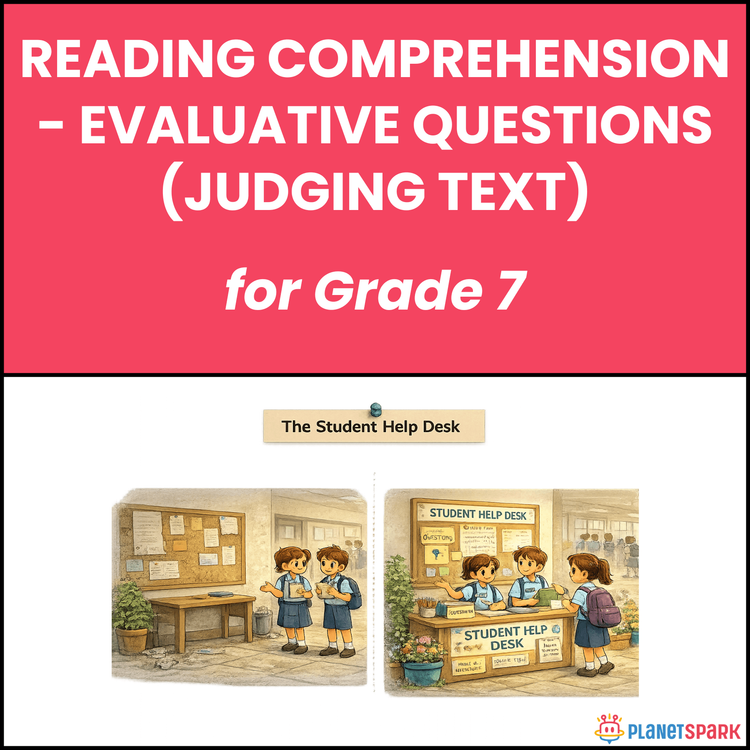
Class 7 English Worksheet on Evaluative Questions
Master Evaluative Questions (Judging Text): Grade 7 Reading Comprehension Worksheet
This Grade 7 worksheet is designed to help students develop strong evaluative reading skills by judging ideas, analyzing decisions, and supporting opinions using evidence from the text. With a variety of engaging exercises, this worksheet provides essential practice for young learners.
In this worksheet, students will focus on understanding how to evaluate actions, ideas, and decisions in a passage, with activities such as:
✔️ Multiple choice questions to judge the best answer based on evaluation and reasoning.
✔️ Fill-in-the-blank exercises using important words from the story.
✔️ True/False statements to test understanding of judgment and logical conclusions.
✔️ Short-answer questions to explain opinions using clear reasons from the text.
✔️ Paragraph completion to strengthen evaluative thinking and reading comprehension.
This worksheet helps students understand how to judge whether an idea is practical, useful, and effective, improving comprehension, critical thinking, and evidence-based reasoning.
Perfect for strengthening core English reading skills in a fun, structured, and practical way!
🔹 Answer Key (for parents and educators)
Exercise 1 – Choose the Best Answer:
1. a) Yes, because it solved daily problems simply.
2. b) It helped shy students ask privately.
3. c) Yes, it improved the original idea.
4. a) She judged it useful and realistic.
5. c) Yes, they saved money and resources.
6. b) He saw the project had real value.
7. c) Yes, because help became faster and easier.
8. a) Clear planning and student teamwork.
9. b) Yes, because support systems build confidence.
10. c) Yes, because the problem is common.
Exercise 2 – Fill in the Blanks:
1. desk
2. box
3. desk
4. signs
5. teacher
6. Friday
7. questions
8. confidence
9. teamwork
10. folders
Exercise 3 – True or False:
1. True
2. True
3. False
4. True
5. True
6. False
7. True
8. True
9. False
10. False
Exercise 4 – Answer Briefly with Judgment and Reasons:
1. The Help Desk was more useful for new students because they often struggled to find classrooms, understand timings, and know whom to ask for help.
2. Yes, the question box was necessary because it helped shy students ask questions privately without feeling embarrassed.
3. Arnav’s idea was stronger because it solved both confusion and embarrassment, not just the problem of finding someone to ask.
4. No, laughter from classmates was not a fair reaction because the idea was practical and later proved helpful for many students.
5. Yes, I agree with Rhea’s brother because asking for help should feel normal and easy, not embarrassing.
6. Yes, using old folders was a good decision because it reduced project cost and reused available materials wisely.
7. Nikhil’s change mattered because it showed that good ideas can change opinions when people see real value in them.
8. The project improved school culture by making students feel more confident, supported, and comfortable asking for help.
9. I would trust students more at this desk because they understand student problems better and can offer quicker practical help.
10. The best lesson from this story is that simple support systems and teamwork can create big positive changes in school life.
Exercise 5 – Complete the Passage:
1. desk
2. box
3. signs
4. teacher
5. Friday
6. confidence
7. teamwork
Help your child strengthen evaluative reading skills and build confidence in judging ideas with evidence-based thinking.
Book a free trial!
Frequently Asked Questions
They teach students to judge ideas, opinions, and arguments using clear reasons and stronger reading comprehension skills.
They encourage critical thinking by asking learners to decide if an idea is strong, fair, or convincing based on the text.
They can ask children to explain whether they agree with a passage idea and support their view with reasons.